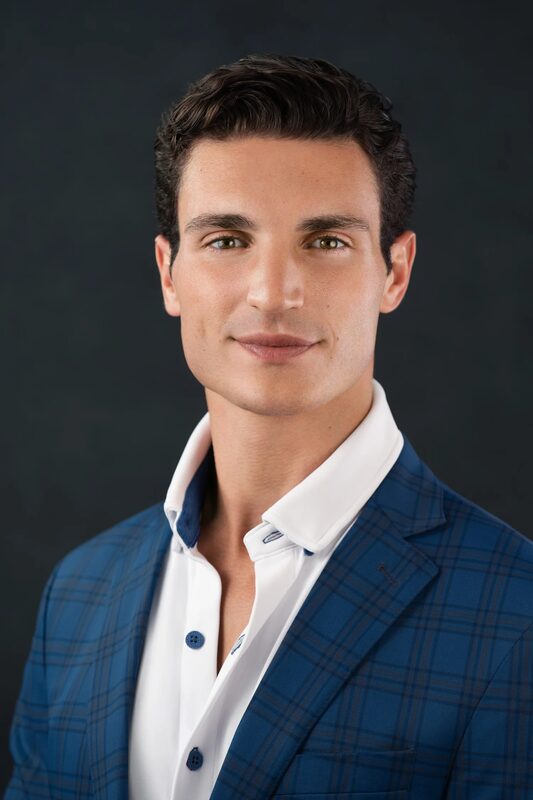
Two formats dominate the Detroit headshot market, and the choice between them decides more than price. Studio sessions at 2921 E Jefferson Ave run $149 for the first image and $99 each additional, with controlled light and a one-hour turnaround on edits. On-location shoots run $299 per hour at your office, factory floor, or restaurant, and they trade speed for context. The right pick depends on your job, your deadline, and what the picture needs to do once it leaves the camera.
## What you actually buy in the studio
Studio buyers buy light, time, and a clean exit. The Jefferson Avenue space uses a five-light setup calibrated for skin tone across the full Fitzpatrick range, a Savage seamless backdrop in white or gray, and a tethered preview screen so you approve frames as we shoot. The first image costs $149 and includes the sitting fee, AI-assisted retouching, and same-day delivery to your inbox. Each additional image runs $99, so a typical executive who wants a hero shot plus a softer alternate for LinkedIn walks out at $248 total.
Studio sessions average twenty-five minutes from arrival to handshake. Parking sits directly in front of the building on East Jefferson, two blocks from the Renaissance Center, and the suite is on the ground floor with no stairs. Hair and makeup add $175 and run thirty minutes before the camera turns on, which matters if you came from a flight or a court appearance. The cost ceiling is predictable: you pay for what you keep, and the meter does not run on chitchat.
Repeat clients from IBM, the Detroit Symphony Orchestra, and the City of Detroit book the studio when they need uniform headshots for a department directory or a press kit. The light matches frame to frame, so a panel of twelve looks like a panel of twelve rather than twelve photos taken in twelve coffee shops. That consistency is the single hardest thing to fake when a corporate communications team assembles a leadership grid.
## What you actually buy on location
On-location buyers buy meaning. A $299 hourly rate covers the photographer, two portable strobes, a softbox, and reflectors carried in two Pelican cases. The photographer arrives forty-five minutes before the first frame to scout windows, kill overhead fluorescents, and tape down cable runs so the legal team does not file an incident report. Most corporate jobs book a two-hour minimum, which puts the floor at $598 before any HMUA.
GM's product team shot their engineering portraits on the Warren tech-center floor because a beige backdrop would have erased the story. FORVIA did the same on the seat-manufacturing line in Auburn Hills. The picture says industrial designer because there is an industrial design behind the subject's left shoulder, and no amount of studio polish substitutes for that signal. Eli Lilly's medical-affairs team books on-location at Henry Ford Hospital when the audience is other physicians who recognize the corridor.
Location work demands tradeoffs the studio does not. Ceiling height limits where you can place a key light, HVAC vents push fabric, security badges take twenty minutes per visitor, and a fire alarm test will end your morning. You pay for the photographer to solve these problems in real time, and the hourly rate exists because the solving is the job. A four-hour shoot at three locations within one building runs $1,196 and produces roughly twenty-five usable frames after culling.
## Picking by role and audience
Lawyers, financial advisors, and consultants almost always pick the studio. Their audience expects the conventions of the genre, a neutral background, soft directional light, a confident half-smile, because the photograph functions as a trust signal. A defense attorney photographed in front of a Cadillac Tower bookcase reads as theatrical to opposing counsel, and theatrical is the wrong note before a deposition. The studio costs less, finishes faster, and the picture does the job.
Founders, executives, and creative directors split the decision. A Series-B founder pitching to Detroit Venture Partners benefits from the studio's cleanliness when the deck needs a uniform team grid. The same founder benefits from on-location work when a magazine assigns a profile and the editor wants the workshop, the prototype, or the loading dock in the frame. Crain's Detroit Business has run on-location portraits of nearly every CEO it has profiled in the last five years, because a desk does not.
Trades, restaurants, and manufacturers should pick on-location every time. A chef in a kitchen, a welder at a torch, a plant manager next to a stamping press, these photographs carry information the studio cannot manufacture. The Detroit Symphony Orchestra books both: studio for musicians' formal program photos, on-location at Orchestra Hall for the artistic director when the marketing campaign needs the building.
## The deadline question
Studio sessions deliver same-day. You walk in at 10 a.m., shoot for twenty-five minutes, approve frames on the tethered monitor, and the finished files land in your inbox by 4 p.m. that afternoon. If a recruiter asked for a headshot Friday and it is Wednesday, the studio is the only honest answer. Same-day editing is included in the $149 price, not an upcharge, because the tethered workflow makes it cheap to deliver.
On-location sessions deliver in three to five business days. The photographer needs to color-match across multiple locations, balance ambient against strobe, and run a second pass on retouching because location frames have more variables. A rushed location edit looks rushed, and the photographer would rather lose the booking than ship a file that embarrasses the firm two years later when it sits on the About page. Plan three weeks of runway if the picture is going on a billboard or a magazine cover.
## The total-cost math
Add up the line items before you decide. A single studio headshot with HMUA runs $149 plus $175, or $324 out the door. Two images with HMUA run $248 plus $175, or $423. A four-person leadership team in the studio, two images each, no HMUA, runs $992. The same team on location, two hours, runs $598 and produces context the studio cannot.
Reverse the math when the team grows. A twenty-person company directory in the studio runs $2,980 at one image each, scheduled over two mornings, with consistent light across all twenty frames. The same twenty people photographed on-location at the office, four hours minimum, runs $1,196 but introduces variation depending on where each person was photographed. For a directory, the studio wins on cost and consistency. For a recruiting campaign that wants the office to read as the office, on-location wins on signal.
HMUA at $175 applies to either format and pays for itself when the photograph will be used at billboard or trade-show scale. Pores, stray hairs, and uneven foundation enlarge as the print enlarges, and retouching cannot fix what good makeup would have prevented. Below eight-by-ten print size, HMUA is optional. Above it, HMUA is not.
## Hybrid bookings and what they cost
Hybrid bookings combine a studio sitting with a location shoot in the same week and reduce the per-image cost on the studio side. A founder who wants one polished headshot for the website and a set of working-environment frames for a press kit might book one studio image at $149 and a two-hour on-location session at $598, total $747. The studio image lands same-day for the LinkedIn post that announces the round; the location frames land Friday for the press release.
Corporate clients with rolling needs sign retainers. A three-month retainer at sixteen hours of location work plus ten studio sittings runs $6,774 and covers
Ready for Professional Headshots?
Book a session at our Bagley Mansion studio. Starting at $149 with unlimited time, wardrobe changes, and hand-painted backdrops.